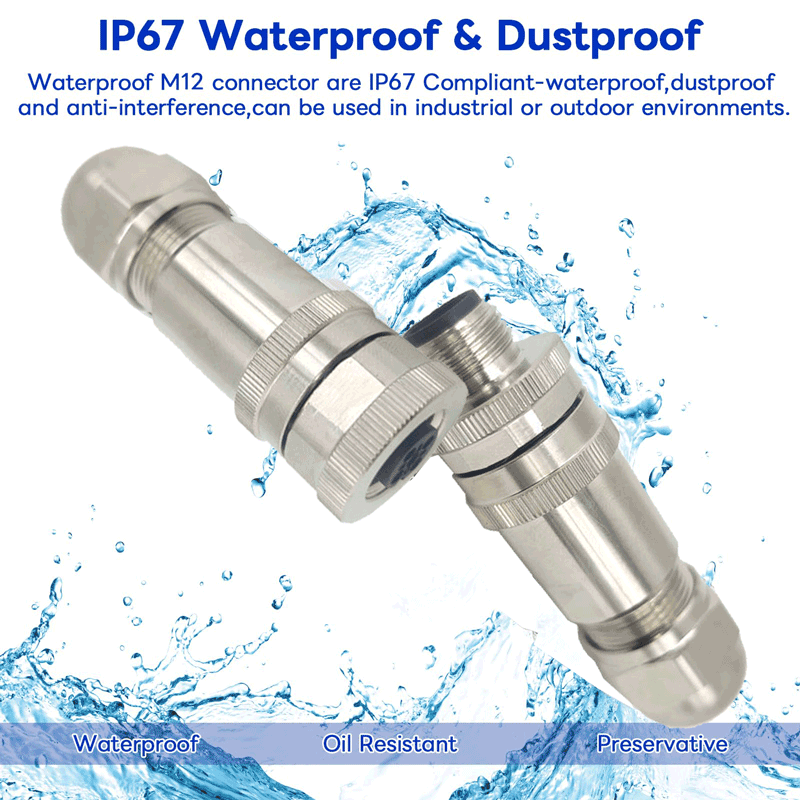
The connector housing has the following main functions and features:1. Provide physical protection to prevent the internal components, pins and connection points of the connector from mechanical damage, contamination, dust, liquids or other environmental conditions.
2. Some connector shells, especially metal shells, can provide electromagnetic shielding to reduce the impact of external electromagnetic interference on internal electronic devices.
3. Generally designed to have sealing properties to prevent water, moisture, dust and chemicals from entering the interior of the connector. This is especially useful outdoors or in harsh environments.
4. Usually has guiding features to help the user insert the connector correctly to ensure correct polarity and connection.
5. The housing can provide mechanical support and stability, ensuring that the connector remains stable when connected and disconnected.
6. It is resistant to high temperature, low temperature or chemical corrosion to adapt to various working environments.
Differences in connector jack shell materials
The choice of connector jack shell materials usually varies according to the specific needs and environmental conditions of the application. Here are the differences between some common connector jack shell materials:
1. Metal material:
Advantages: It has high mechanical strength, provides good protection performance, and is suitable for some environments that require high durability and anti-interference, such as industrial and military applications.
Disadvantages: It may be heavy and sometimes not suitable for applications that require lightweight. Metal may also lead to higher costs
2. Plastic material:
Advantages: Lightweight, relatively low cost, and can provide good electrical insulation performance. Widely used in general consumer electronics and industrial applications.
Disadvantages: The mechanical strength may not be as good as metal, and may not be durable enough for some extreme environments.
3. Thermoplastic elastomer (TPE):
Advantages: It has good elasticity and softness, and is suitable for applications that need to resist: impact and vibration.
Disadvantages: It may not provide high mechanical strength as metal or plastic.
4. Silicone:
Advantages: High temperature resistant, good softness and elasticity, suitable for high temperature environments or applications that require good sealing performance.
Disadvantages: The cost may be higher.
5. Ceramics:
Advantages: High temperature stability, corrosion resistance and mechanical strength, suitable for special environments such as high temperature, chemical corrosion, etc.
Disadvantages: High cost and high manufacturing complexity.
6. Glass fiber reinforced plastics:
Advantages: Combines the lightness of plastics and the strength of glass fibers to provide relatively high mechanical properties.
Disadvantages: The cost is slightly higher than plastics, but it may still be lighter than metals.
7. Composite materials:
Advantages: By combining different materials, a balance can be achieved between performance and cost.
Disadvantages: The process of manufacturing composite materials may be more complicated and the cost may also be relatively high.