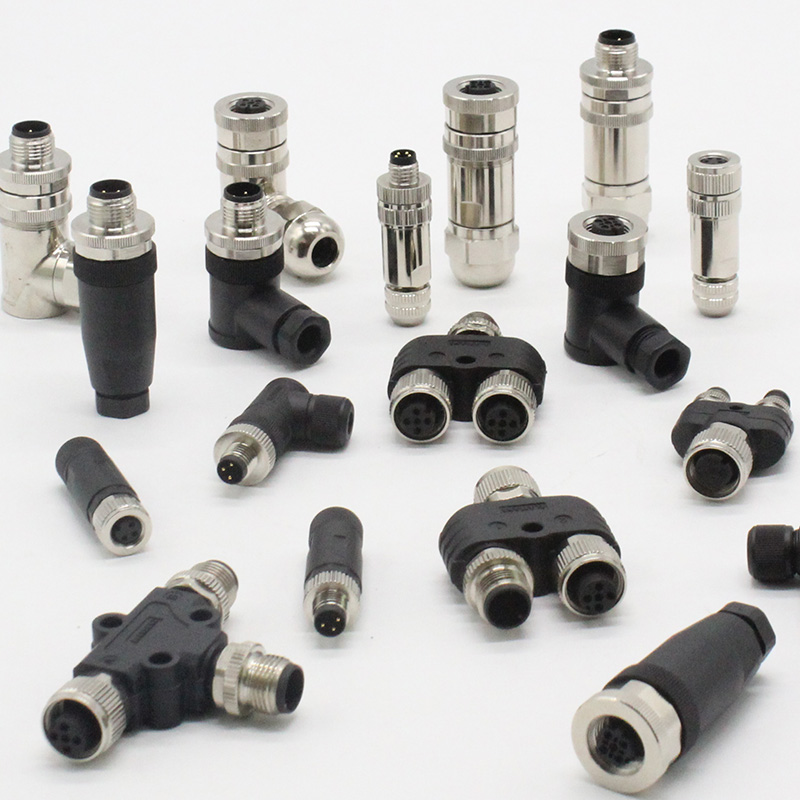
High-voltage connectors play a critical role in the electric vehicle (EV) charging infrastructure, and their impact can be observed in several key areas:
1. Enable High-Power Charging:
High-voltage connectors are designed to handle the increased power demands of modern EVs. They facilitate the transfer of higher currents at lower temperatures, which is essential for fast charging. As the IEA Global EV Outlook 2023 notes, there is a global push towards developing standards for megawatt-scale chargers to achieve maximum interoperability for electric HDVs, which will be crucial for enabling a fast rollout of charging technology.
2. Enhance Safety and Reliability:
These connectors often include safety features such as High Voltage Interlock (HVIL), which ensures that the connector is not live when it is unlocked, reducing the risk of electric shock during servicing or charging. Additionally, features like secondary unlocking and Terminal Position Assurance (TPA) provide extra security against accidental disconnection or terminal dislodgement, as discussed in the Electric Vehicle High-Voltage Connectors Ultimate Guide.
3. Support Grid Integration:
High-voltage connectors contribute to the integration of EVs with the power grid by enabling bi-directional energy flow. This allows for vehicle-to-grid (V2G) technology, where EVs can feed energy back into the grid or act as energy storage during peak demand times. The IEA Global EV Outlook 2024 highlights the importance of grid integration strategies and the role of charging infrastructure in promoting sustainable e-mobility.
4. Contribute to Charging Infrastructure Expansion:
The development of high-voltage connectors supports the expansion of charging infrastructure by allowing for a variety of charging solutions, from home charging stations to high-powered commercial charging points. This diversity is crucial for meeting the needs of different types of EV users and supporting the widespread adoption of EVs.
5. Improve Charging Efficiency:
High-voltage connectors can reduce energy losses during the charging process due to their lower resistance design. This efficiency is particularly important for high-powered charging stations, which can charge EVs quickly while minimizing power loss.
6. Facilitate Standardization and Interoperability:
As the market moves towards standardizing charging technologies, high-voltage connectors play a key role in ensuring that different EV models can use a wide range of charging stations. This standardization is essential for the widespread adoption of EVs and the build-out of a comprehensive charging network.
7. Enable Advanced Charging Technologies:
High-voltage connectors are necessary for advanced charging technologies, such as inductive charging, which requires high-voltage, high-current connections for efficient power transfer. This technology is still emerging but holds promise for the future of wireless EV charging.
8. Support the Growth of the EV Market:
As charging infrastructure improves, including the use of high-voltage connectors, the market for EVs is likely to grow. This growth is supported by the increasing number of public and private charging stations, which in turn is facilitated by the development and deployment of high-voltage connectors that can handle the power demands of these stations.
In summary, high-voltage connectors are essential components of the EV charging infrastructure, enabling faster charging, improved safety, better grid integration, and supporting the overall growth and sustainability of the EV market.